How the game runs, in full.
Everything a program head, a timetabler or a committee needs in order to place The Boardroom Game inside an existing course. Written to be printed and taken into a meeting.
Default format. Compressible to two days or spread across five half days.
Students per team, each holding a different executive role.
Companies competing in one market. Larger cohorts run several markets in parallel.
The specification
- Format
- Three consecutive days by default. It can be compressed into two days, or spread across five half days to sit alongside teaching.
- Structure
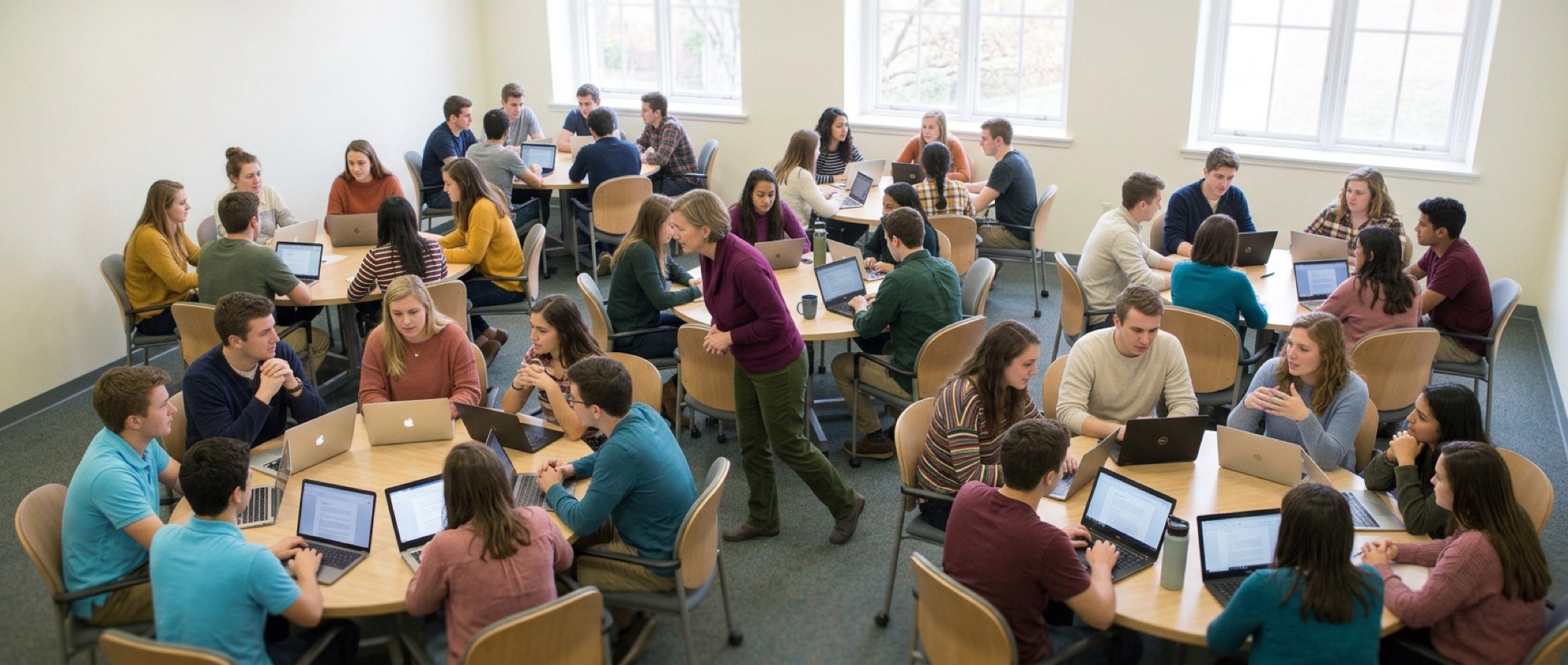
- Teams of five or six students. Up to five teams share one market. Larger cohorts run several markets in parallel.
- Roles
- Each student takes an executive role with a different view of the business. Marketing, finance, operations and people are separate seats at the same table.
- Rounds
- Decisions are submitted in sequence, in the open. Round durations shorten as the game progresses, mirroring a business that accelerates.
- Events
- Real world events are injected during play and reshape market conditions. Teams find out the way an executive does: after the conditions have already changed.
- Scoring
- A weighted business health score across cash, customers, brand, morale and strategic milestones. Not cash alone.
- The sector
- The simulated market is global hospitality, chosen because it feels every shift in the world economy first.
- Facilitation
- Lamba delivers the program. University faculty can be trained to lead individual markets alongside us as cohorts grow.
- You provide
- A room per market with table seating, a screen and wifi. Students bring laptops.
- We provide
- The platform, the facilitation, the materials and the debrief.
- Assessment
- Optional. Team scores, individual reflection briefs and a facilitator report, if the university wants it graded.
What a student leaves with, as a consequence of play
They decide without the full picture
Because the data keeps moving and the round closes anyway.
They argue a position and carry a room
Because their role sees numbers the others do not, and the team submits one decision.
They hold four functions in one head
Because price, hiring, brand and cash are wired to each other inside the model.
They read competitors, not just reports
Because the market is shaped by the four other teams in the room.
They recover from a decision that cost them
Because every team makes one, and the game continues after it.
A day, in shape
Day one
Roles assigned, companies formed, the market explained. First rounds run long while teams learn what their numbers mean.
Day two
Rounds shorten. Events land. Positions separate, and teams start playing against each other rather than against the model.
Day three
Final rounds, results, then the debrief. Every decision is replayed, defended and explained, including what the competition was thinking.
Let's talk about your students.
Twenty minutes. We will show you how it plays and work out whether it belongs in your program.